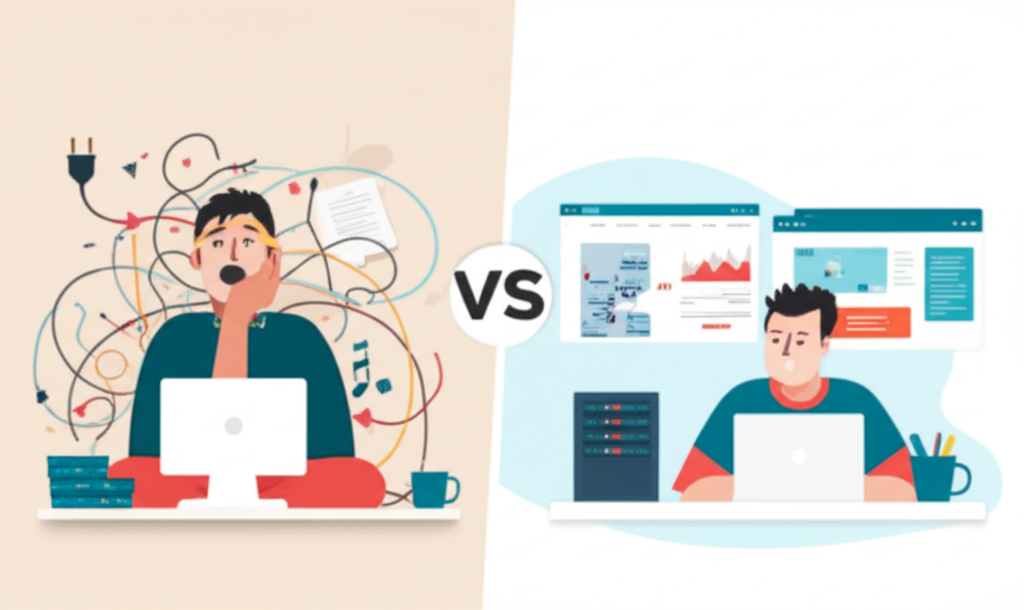
So, you're pondering a move for your website and email hosting? Maybe you've seen enticing offers or are just feeling like your current setup isn't quite cutting it. I recently went through this myself, and while the initial process took a bit longer than I'd hoped, the long-term payoff looks promising - a significant chunk of change saved over the next few years!
Switching hosting providers can feel like a big leap, and it's natural to weigh the pros and cons. Let's break down the potential upsides and downsides to help you decide if it's the right move for you.
The Wins: Why a Host Switch Might Be Your Best Move
- Pocketing the Savings: New hosting companies frequently roll out introductory prices that undercut current rates, with savings potentially reaching hundreds (or even more!) over time.
- Boosting Performance and Reliability: Upgraded infrastructure delivers faster loading times, reduced downtime, and dependable email service.
- Unlocking New Features: Advanced offerings include expanded storage and bandwidth, enhanced security like free SSL certificates, improved control panels, one-click app installations, and robust email management.
- Finally, Great Support! Access to responsive and knowledgeable support teams resolves technical issues reliably.
- Room to Grow: Seamless scalability enables plan upgrades without major disruptions as your online presence expands.
- Embracing Modern Tech: Newer providers utilize latest server technologies and software for improved performance and security.
The Challenges: What to Watch Out For
- The Time Commitment: Migration requires backing up everything, transferring files and databases, adjusting DNS records, and reconfiguring email across devices.
- The Dreaded Downtime: Temporary website or email outages risk affecting visitors and communication during transition.
- The Learning Curve: Different hosting providers operate uniquely, requiring adjustment time.
- The Hidden Costs: Introductory pricing may increase significantly at renewal; features previously included might carry extra charges.
- Potential Compatibility Quirks: Websites or applications occasionally face compatibility issues requiring troubleshooting or code adjustments.
- The (Small) Risk of Data Hiccups: Data transfers carry minimal risk if handled carefully; maintain independent backups.
The Bottom Line
Switching web and email hosting can be advantageous for cost savings, performance improvements, and accessing superior features and support. However, the migration process demands time and meticulous planning. My experience demonstrated that the initial effort can be a bit more involved than expected, but the potential long-term benefits can absolutely make it worthwhile. Thorough research and careful provider selection yield optimal results.