I just finished a small business website redesign on my own shop, and I did the thing most people are afraid to do: I tested the old version against the new one, head to head, and promised to publish whatever came back. No pride. Let the best one win.
Here's the twist. I expected the story to be about speed. It turned out to be about something I had been ignoring for years.
Twenty Years and Several Lifetimes
Bronstaddesign.com has been online since the early 2000s. It has worn a lot of outfits. For most of the last decade it ran on WordPress, for one simple reason: that's how you build a modern website. Everybody said so. You install WordPress, you add a theme, you bolt on a plugin every time you need a new trick.
And it works, right up until it doesn't. Every plugin adds code. Every theme update drags along things you never use. One day you look under the hood and your simple little site is hauling around dozens of scripts, three different ways to make a button, and a database doing somersaults just to show a visitor your phone number. That's bloat. It is the web equivalent of moving houses and keeping every box you've ever packed.
Why I Came Full Circle
Then AI changed the math. Building a clean, hand-coded site used to be slow, expensive work - the kind most small businesses couldn't justify. Now one person with the right tools can build lean pages quickly, by hand, without the plugin pile. So I went back to where I started: plain, fast HTML and PHP. Less code. Fewer moving parts. Pages that load and get out of the way.
This isn't nostalgia. It's a tradeoff I made on purpose. I gave up the point-and-click convenience of WordPress plugins. In return I got a site I can change in seconds, that loads almost instantly, and that nothing can hack through a plugin I forgot to update. For a small business, that's the better deal almost every time.
The Speed Test: Old Homepage vs. New Homepage
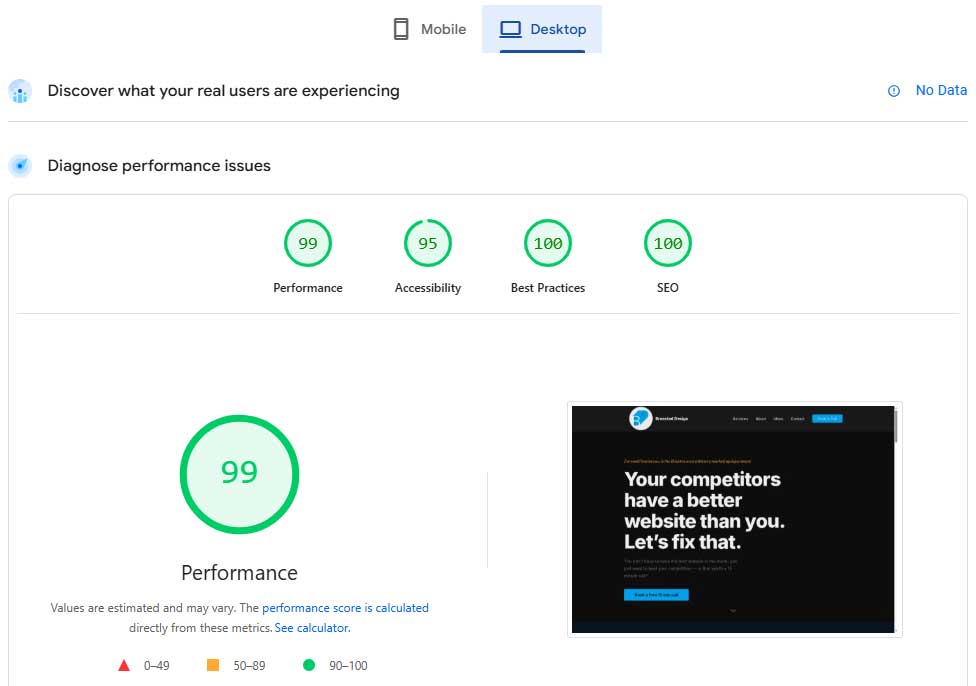
Enough theory. I put both homepages through Google's PageSpeed test - the same tool Google uses to size up how your site performs - and lined the scores up side by side. Same test, same day, same judge.
Google PageSpeed, desktop — old vs. new
Performance: 86 → 99
Accessibility: 79 → 95
SEO: 92 → 100
Best Practices: 100 → 100
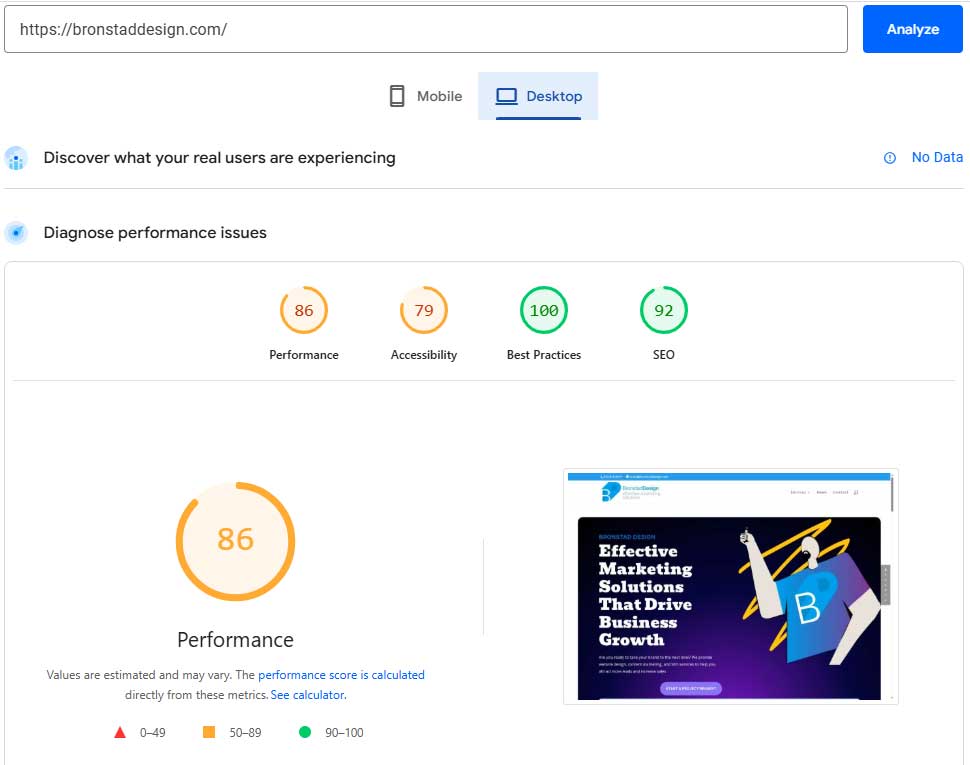
Let me be straight about what this shows. That 86 was not a lazy score - I fought for it. Hours of it: caching, trimming plugins, compressing images, every optimization the platform allows. And 86 is about where a real WordPress site tops out. I've never gotten one much past 90, because the bloat isn't a setting you can switch off - it's baked into how WordPress works. You can tune it forever. It's still carrying the weight.
The new site hit 99 without breaking a sweat, on a fraction of the code, and aced accessibility and SEO on the way. That's the whole difference: fighting the platform versus building lean from the start. (Mobile is the one spot I'm still tightening - that's the next pass, and I'd rather tell you that than pretend otherwise.)
The Bigger Win Wasn’t Speed. It Was Focus.
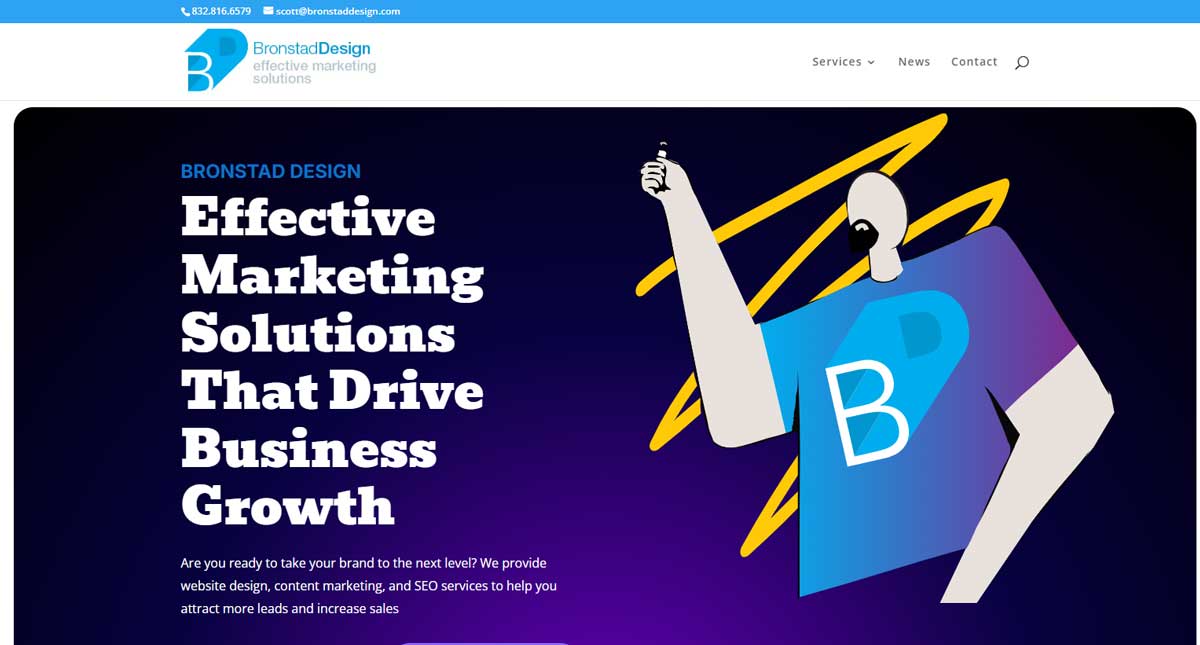
Here's the part no speed test can measure. My old homepage led with this: "Effective Marketing Solutions That Drive Business Growth." Read it again. It says nothing. It's what a business writes when it's scared to leave anyone out, so it tries to be everything to everybody. I can do anything! Which, to the person visiting, lands as: I do nothing in particular.
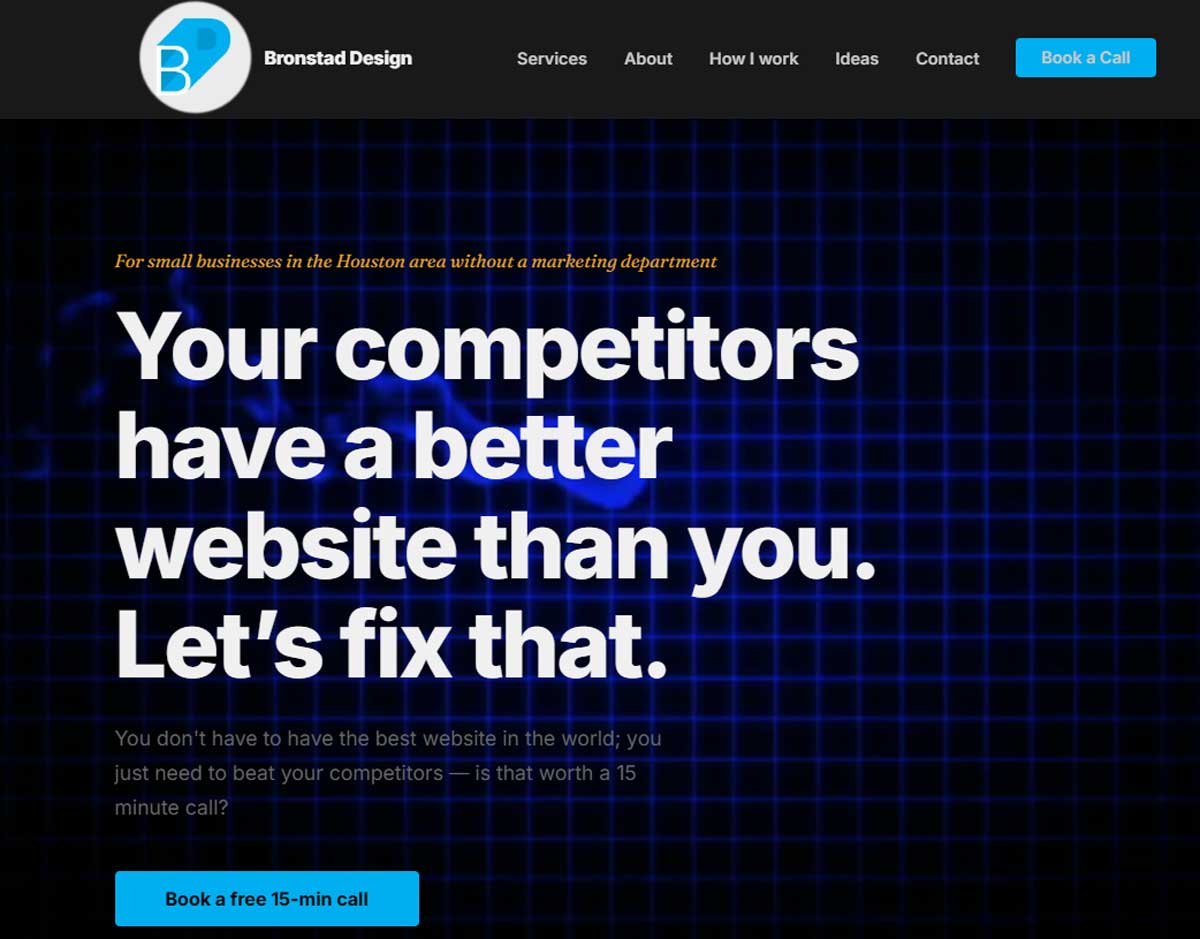
The new homepage says one thing plainly: I build websites, and I run the email and marketing automation behind them. Focus isn't about turning people away - it's about finding what people need most and doing that well. In my experience, once you've done a good job on what someone came for, it naturally leads to "can you also do X?" Then it's a conversation. A focused site does something a scattered one can't: it tells the right person, in about three seconds, "you're in the right place." That clarity is worth more than any score on this page.
What a Small Business Website Redesign Actually Buys You
If you own a small business, your website's speed is not a tech detail. It's money. Google ranks faster sites higher, so a slow site is harder to find in the first place. And once people land, they leave fast pages less and slow pages more - every extra second is a few more visitors gone before they ever read a word about you.
A good redesign buys you four plain things:
Findable
A site people can actually find.
Fast
A site that loads before they give up.
Clear
A message clear enough that the right person knows they're in the right place.
Editable
Something you (or I) can update without wrestling a clunky system.
That's the whole game. Everything else is decoration.
This is exactly what I do for clients - the same lean approach, the same honest test. If your site feels slow, unfocused, or just stuck in an older era, that's a fixable problem, and it's the one I enjoy most.