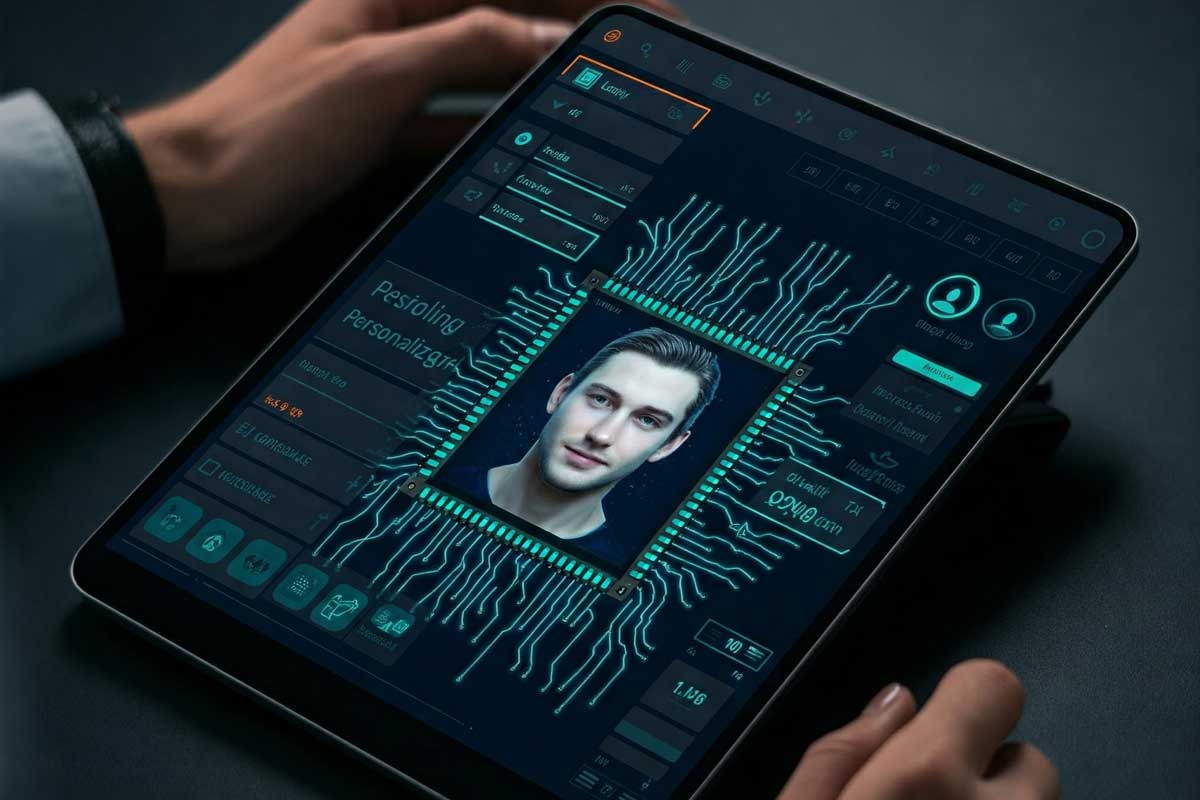
In today's digital landscape, AI personalization has become the cornerstone of user experience. While many companies talk about implementing AI, few have demonstrated its transformative power as effectively as Spotify. Their journey from a simple streaming service to a personalized music discovery platform offers valuable lessons for businesses of all sizes looking to harness AI for personalization - making each user feel like the entire platform was built just for them.
How Spotify Changed the Game
- Founded: 2006 in Stockholm, Sweden
- Active Users: Over 500 million (2023)
- Paying Subscribers: Over 200 million
- Content Library: 100+ million tracks
The Journey to Personalization
In 2015, Spotify faced a pivotal moment. Despite having millions of songs, users spent an average of 20 minutes per day manually searching for music they liked. Discovery was becoming a frustration point, and competitor Apple Music had just launched. Spotify needed to solve what their team called the "paradox of choice" - when presented with millions of songs, users often defaulted to familiar tracks rather than discovering new music they might love.
Enter Discover Weekly, Spotify's first major AI personalization breakthrough. Launched in July 2015, this AI-powered playlist became what former CEO Daniel Ek called "the biggest personalization project we've ever done." The results were staggering: within the first year, users streamed over 1.7 billion tracks from Discover Weekly playlists, and 8 billion songs were saved to personal playlists from these recommendations.
The Technology Behind the Magic
Spotify's engineering team built their recommendation system using three distinct AI approaches:
- Collaborative Filtering: The system analyzes billions of user-created playlists to find patterns. When multiple users group the same songs together, the AI learns these songs are likely related.
- Natural Language Processing: By analyzing news articles, blogs, and social media posts about music, Spotify's NLP models understand the cultural context of songs. They process over 2 billion music-related text documents monthly.
- Audio Analysis: Raw audio analysis using convolutional neural networks identifies traits like tempo, key, and mood. Their audio analysis AI processes over 100,000 new tracks weekly.
Real Results with Real Numbers
The impact of these AI implementations was clearly documented:
- User engagement increased by 30% after the introduction of personalized playlists
- Premium subscriber churn rate decreased from 7.7% to 4.5% between 2015 and 2017
- Daily active users spending time with personalized playlists increased from 20% to 49%
Gustav Soderstrom, Spotify's Chief R&D Officer, shared: "Before personalization, users needed to work to find music. Now, music finds them." This philosophy led to the creation of more AI-powered features:
- Release Radar (2016): Personalized new release recommendations
- Daily Mix (2016): Multiple personalized playlists based on different genres
- Blend (2021): AI-powered playlist merging friends' music tastes
Learning from Failures
Not all AI experiments succeeded. In 2018, Spotify tried implementing an AI system to automatically remove hate speech from songs. The system's 90% false positive rate led to its quick retirement. Instead, they switched to a hybrid approach combining AI flagging with human review.
Measurable Business Impact
- Revenue per user increased by 13% after personalization features launched
- User lifetime value improved by 22% between 2015 and 2017
- Marketing costs per acquisition decreased by 27%
- Time spent on platform increased from 60 minutes to 104 minutes daily (2015-2020)
The Future of AI Personalization

Spotify's success with AI personalization isn't just a story about music - it's a blueprint for the future of customer experience. The key lesson from Spotify's journey isn't about having the biggest budget or the most sophisticated technology; it's about understanding that personalization is fundamentally about solving user problems.
Looking ahead, the next frontier of AI personalization will likely be even more seamless and predictive. With the emergence of large language models and more sophisticated machine learning algorithms, we're moving toward a future where personalization won't just be about recommending products or content - it will be about anticipating needs before users even express them.
As Soderstrom noted: "The best personalization is invisible." Whether you're a startup or an enterprise, the goal remains the same: using AI not just to serve users, but to understand them.
Tools for Businesses
Enterprise-Level Solutions
- Adobe Target - Enterprise-level personalization. T-Mobile achieved a 49% increase in conversions.
- Dynamic Yield (Acquired by Mastercard) - E-commerce personalization with predictive targeting. URBN increased AOV by 15%.
- Optimizely - Web content personalization with A/B testing and AI optimization. IBM increased conversions by 33%.
Mid-Market Solutions
- Insider - Cross-channel personalization with AI-powered customer journey orchestration. Starting at $1,500/month.
- Algonomy (formerly Monetate) - Retail personalization at scale. Custom pricing based on traffic.
Small Business Solutions
- Klaviyo - Email and SMS personalization with predictive analytics. Starts at $20/month.
- Drip - E-commerce personalization with AI-powered customer segmentation. Starts at $39/month.